MyColonDoc Reached 10K Google Search Clicks—and Continued Beyond 11K #
On August 22, 2026, Google Search Console confirmed that MyColonDoc.com had reached 10K clicks from Google Search in the previous 28 days.
Eleven days later, on September 2, 2026, the website achieved its next verified milestone: 11K Google Search clicks in 28 days. By September 5, Search Console showed approximately 11.3K clicks toward the next 12K achievement.
This marked a major transformation for a specialty medical website that had once recorded only 60 Google Search clicks in 28 days.
MyColonDoc.com is the website of Dr. Aisha Akhtar, Proctologist, Colorectal & Hemorrhoid Surgeon in Phoenix. Its growth demonstrates how technical infrastructure, medical content, local optimization, physician authority, and AI-search readiness can work together as a long-term patient acquisition system.
Verified 10K and 11K Google Search Milestones #
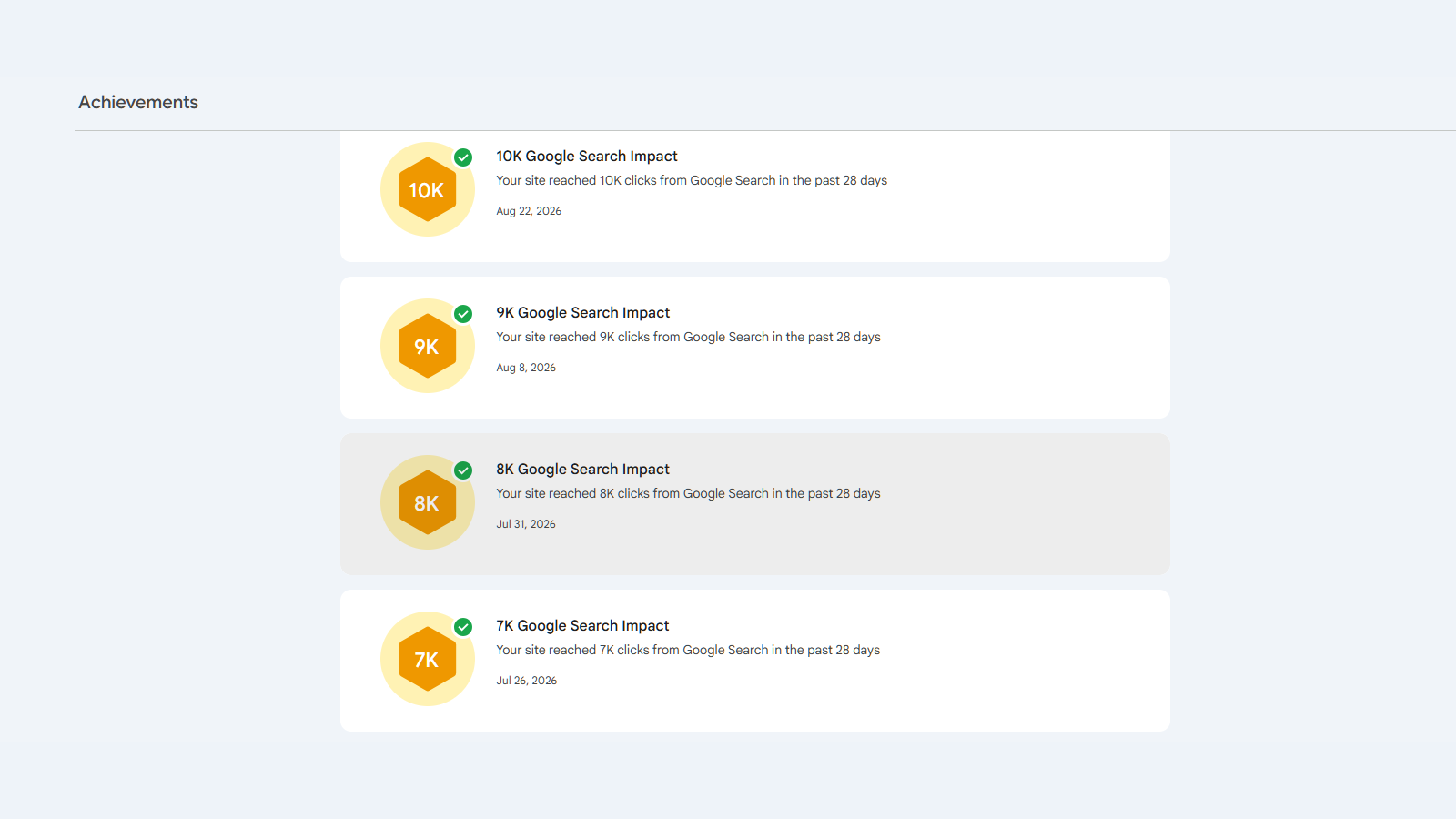
Google Search Console recorded:
- 6K clicks: July 22, 2026
- 7K clicks: July 26, 2026
- 8K clicks: July 31, 2026
- 9K clicks: August 8, 2026
- 10K clicks: August 22, 2026
The website doubled from 5K clicks on July 18 to 10K clicks on August 22, a period of approximately five weeks.
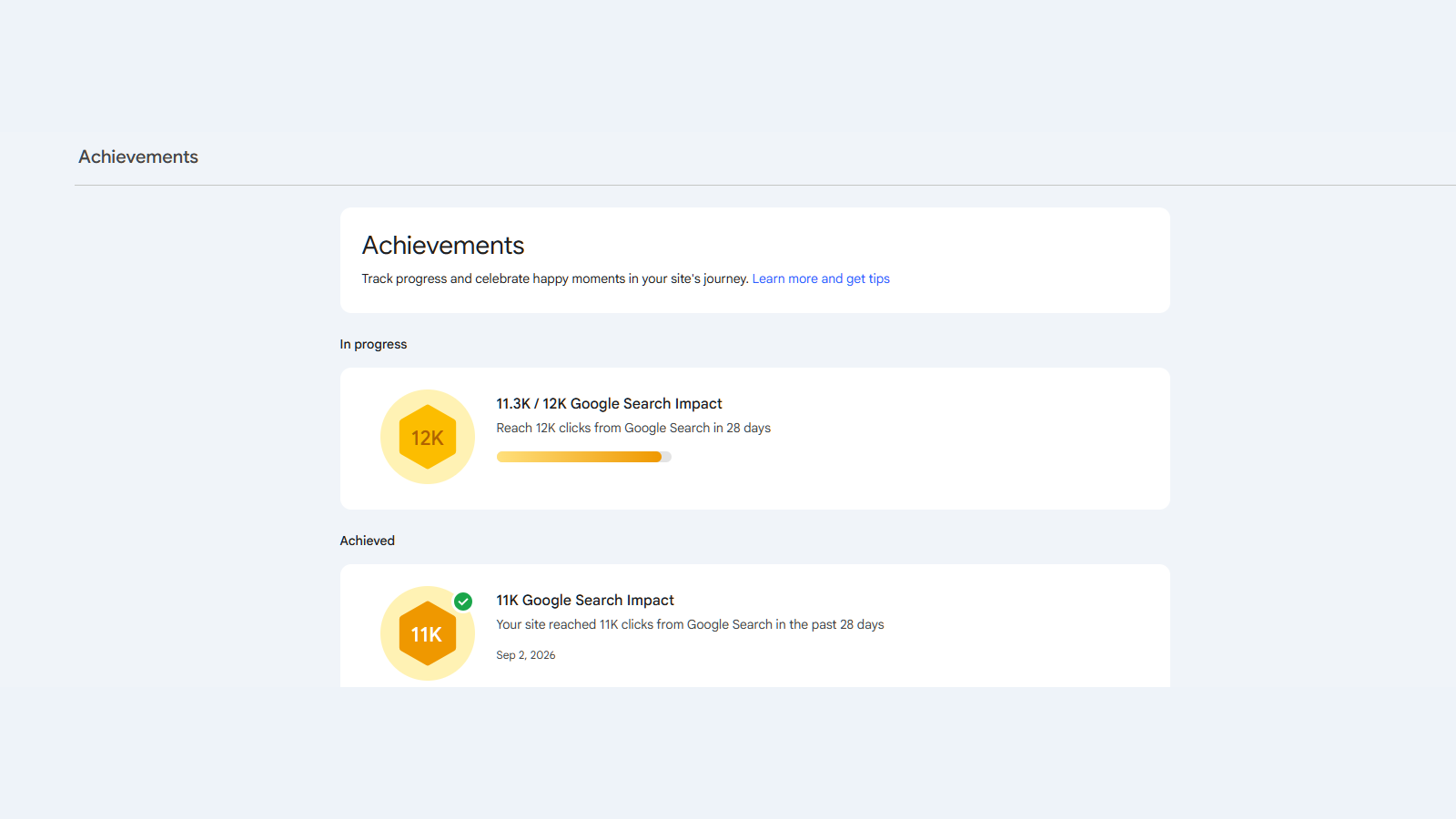
Google Search Console then recorded:
- 11K clicks: September 2, 2026
- Approximately 11.3K clicks toward 12K: September 5, 2026
Compared with the original 60-click benchmark, the 10K milestone represented:
- More than 166 times the original search traffic
- Approximately 16,567% growth
- 9,940 additional clicks in a rolling 28-day period
At 11K, the website had reached more than 183 times the original benchmark, representing approximately 18,233% growth.
These are first-party Google Search Console measurements, not third-party traffic estimates.
The Full Organic Growth Journey #
The strongest evidence is not one isolated result but the consistency of the milestone progression.
| Google Search clicks in 28 days | Achievement date | Growth versus 60-click benchmark |
|---|---|---|
| 60 | January 29, 2025 | Original benchmark |
| 1.5K | June 28, 2026 | 25× |
| 3K | July 9, 2026 | 50× |
| 5K | July 18, 2026 | More than 83× |
| 10K | August 22, 2026 | More than 166× |
| 11K | September 2, 2026 | More than 183× |
Structured digital growth management began after the formal baseline review on February 21, 2026. Active implementation started on February 22, 2026.
The strategy did not rely on paid search traffic. It focused on building organic visibility that could compound as the website’s technical quality, content depth, topical relevance, and authority improved.
What Drove the Growth From 5K to 10K #
1. Patient-intent content reached more search journeys #
Patients do not always begin by searching for a physician’s name. They may start with a symptom, a sensitive question, a possible diagnosis, or uncertainty about which specialist to see.
MyColonDoc developed content around these real search journeys. The goal was to provide medically relevant information while creating clear pathways toward appropriate specialist evaluation.
2. Topic clusters increased depth and context #
Instead of treating each page as an isolated article, related resources were organized around connected medical topics. Condition pages, treatment explanations, frequently asked questions, location information, and physician credentials supported one another.
This structure helped create stronger topical coverage around colorectal and anorectal care.
3. Technical performance supported a growing content library #
The website used a modern, performance-focused architecture with improved crawlability, mobile usability, metadata, sitemap management, and internal navigation. As the content library expanded, the technical foundation helped search engines discover and process it efficiently.
4. Local relevance connected education with care #
Educational visibility was connected with Dr. Akhtar’s real service area and specialist expertise. This helped the website serve both informational searches and high-intent local searches for colorectal, hemorrhoid, proctology, and pelvic floor care in the Phoenix area.
5. Physician authority and trust signals were strengthened #
Medical content requires a higher level of trust. Board certifications, professional profiles, clinical expertise, practice information, and structured medical data helped clarify who was responsible for the content and care described on the website.
6. Search and AI visibility were monitored together #
Content structure was developed for both traditional Google results and emerging AI-assisted discovery pathways, including Google AI Overviews, AI Mode, ChatGPT, Gemini, Perplexity, and Copilot.
The purpose was not to chase a single platform. It was to make MyColonDoc’s medical information clear, well-structured, attributable, and useful wherever patients begin their research.
Traffic Became a Measurable Patient-Acquisition Opportunity #
Traffic alone is not the final measure of success for a physician website. The website must help relevant visitors understand the physician’s expertise and take the next step toward care.
During August 1–31, 2026, MyColonDoc recorded:
- 12,070 Google organic clicks during the calendar-month reporting period
- 19,048 website sessions
- 56 new appointment requests
The 12,070 calendar-month clicks and the 10K–11K achievement figures measure different date ranges. Search Console achievements use rolling 28-day windows, while the August performance report covers the full calendar month. Both measurements independently demonstrate the scale of the website’s organic visibility.
Appointment requests cannot be attributed to SEO alone without complete source-level attribution for every patient. However, the combination of increased organic visibility and measurable appointment activity shows why a medical website should be evaluated as part of the practice’s patient acquisition infrastructure—not merely as an online brochure.
What This Result Means for Independent Medical Practices #
The MyColonDoc case study challenges several common assumptions about medical digital marketing.
A physician website can become a growth asset #
A website does not have to remain a static collection of service pages. With sustained technical, content, local, reputation, and conversion work, it can become an active discovery and education platform.
Organic visibility can reduce dependence on paid traffic #
Paid advertising can create immediate visibility, but that visibility generally stops when spending stops. Organic search growth requires time and ongoing work, but the resulting content and authority can continue supporting discovery across many relevant queries.
Specialized expertise can compete effectively #
Independent specialists may not have the advertising budgets of hospital networks or national healthcare platforms. They can still compete by presenting deeper expertise, clearer local relevance, stronger physician credibility, and more useful patient information.
Social posting alone is not a complete growth strategy #
Social media is a distribution channel, not a substitute for a complete digital presence. Search visibility, technical quality, medical content, local discovery, reputation, analytics, and conversion pathways require dedicated investment and continuous management.
Key Lessons From Reaching 10K and 11K Clicks #
The MyColonDoc growth journey reinforces several practical lessons:
- Medical SEO should be managed as a connected system.
- First-party measurements should be used whenever possible.
- Patient relevance matters more than traffic volume alone.
- Technical performance and content quality must develop together.
- Strong internal linking helps turn separate pages into topical authority.
- Local SEO connects educational content with real patient care.
- Physician credentials and trust signals are essential in medical search.
- AI-search readiness should complement—not replace—traditional SEO.
- Conversion tracking is necessary to connect visibility with practice growth.
- Sustainable growth requires ongoing management after the initial website rebuild.
Explore the Complete MyColonDoc Growth Series #
This article is the latest part of AbiTechTure’s documented MyColonDoc medical SEO journey:
- Medical SEO Case Study: From 60 to 1.5K Monthly Google Clicks
- MyColonDoc Medical SEO Growth: From 1.5K to 3K Google Clicks
- How MyColonDoc Grew From 3K to 5K Google Clicks
- MyColonDoc Reached 10K Google Search Clicks—and Continued Beyond 11K
Conclusion #
MyColonDoc’s growth from 60 to more than 11K Google Search clicks in a rolling 28-day period demonstrates the compounding potential of structured medical SEO.
The result was built through a coordinated system that combined technical infrastructure, patient-intent content, topical depth, local optimization, physician credibility, internal linking, AI-search readiness, analytics, and conversion pathways.
Most importantly, the growth was accompanied by measurable patient activity, including 56 new appointment requests during August 2026.
For independent medical practices, the lesson is clear: a properly managed website can become a long-term digital growth and patient acquisition asset.
Need Similar Growth for Your Medical Practice? #
AbiTechTure helps doctors, surgeons, clinics, and specialty practices modernize their websites and build measurable organic growth systems.
Our work combines enterprise-grade website architecture, technical SEO, patient-intent content, local visibility, physician authority, AI-search optimization, analytics, and conversion improvement.
If your medical website is not generating sufficient search visibility or patient inquiries, begin with a structured website and digital presence assessment.
Contact AbiTechTure:
Email: info@abitechture.com
Website: abitechture.com